
A perpetual pursuit of precision and detail—such is the life of a fundamental physicist. We follow equations into the depths of the unknown, driven by the glamour that, one day, all particles and forces of nature will collapse into a single, fundamental framework: a final theory.
In ‘The Dream of a Final Theory’, Weinberg famously paints this possibility; a future where physics arrives at its endpoint. A theory not only of how nature behaves, but why it behaves this way, necessarily and inevitably.
It is a compelling dream. One that continues to inspire generations of students today (including myself). It sparks excitement! For what if we are right around the corner? What if we are almost there? Wouldn’t you want to be part of that discovery?
The dream of finality has roots older than modern physics itself. What we experience today—our desire, our hope, our anticipation—turns out to be far from novel. Even the ancient Greeks envisioned their átomos as some most fundamental and indivisible entity. Centuries later, Dalton resurrected this term in the physical sciences, believing that indeed atoms of chemistry could be the fundamental building blocks of nature.
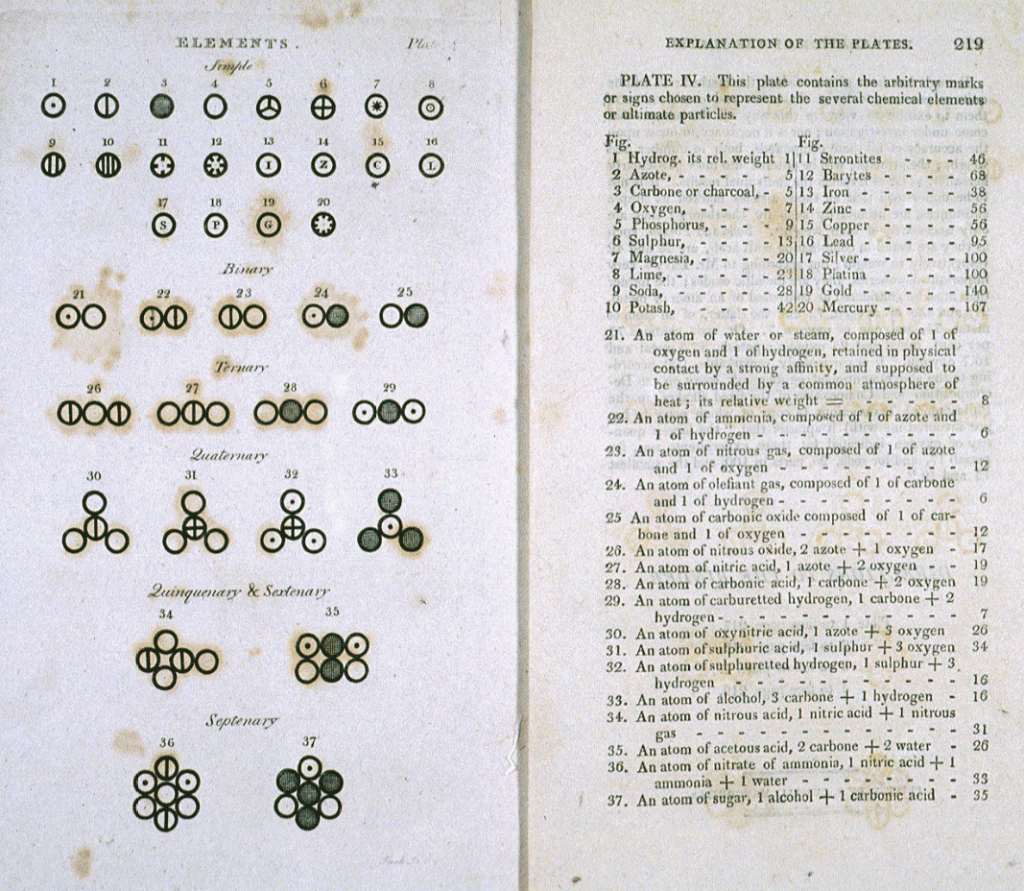
But like any other attempt at finality, Dalton’s vision was doomed to fail. That is crystal today: Dalton neither foresaw the subdivision of atoms into electrons, neutrons, and protons, nor further to fundamental particles of the Standard Model. His failure was simply inevitable.
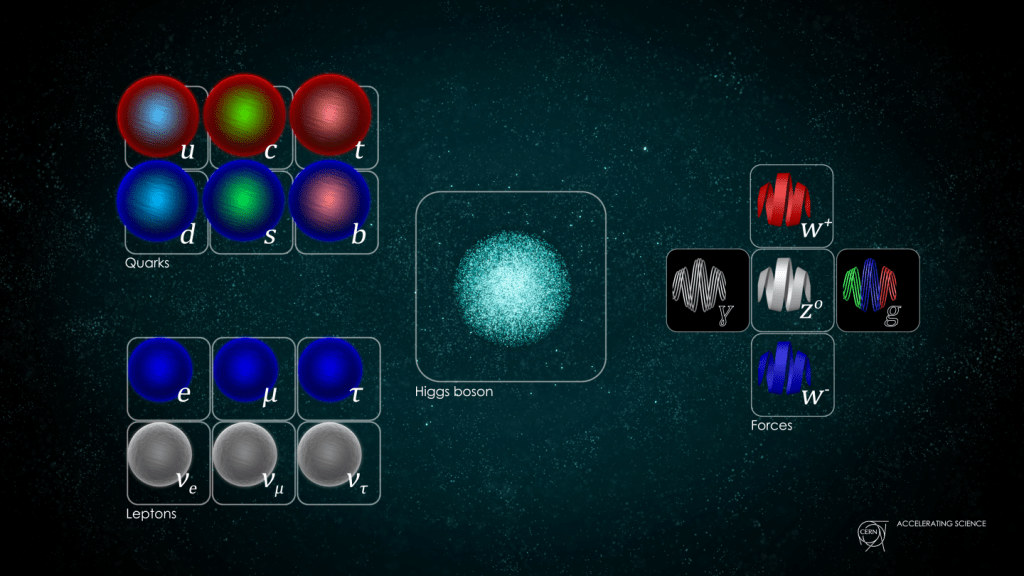
What about now? With particle colliders and formidable mathematical tools at hand, we continue this tradition of peeling back nature’s layers. We speak today of quantum gravity (QG) as the next promised land—a theory meant to reconcile general relativity with quantum field theory—the ‘final missing piece’ before the puzzles of fundamental physics finally snap shut.
And so, once again, the old language returns.
What sparked me to write this post is the worrying air of casual certainty I have begun to notice in parts of the recent literature. A clear example can be found in Faizal et al. (2025a) and (2025b), where the terms ‘Quantum Gravity’ and ‘Theory of Everything’ are used almost interchangeably—as though it were self-evident that QG must, by definition, resolve all of nature.
I find this surprising, to say the least. We have been grappling with the same foundational tensions in physics for decades, and yet the assumption persists that once gravity is consistently married with quantum physics, the story is complete. But why should that follow?
It seems to me that expectations of QG may be overly ambitious. At the very least, they deserve closer scrutiny; and perhaps a measure of modesty.
What, then, should we actually expect QG to do?
Zooming in — “What is it made of?”
At its core, this desire rests on a familiar instinct. In popular media, for example, QG is often crowned the elusive “Theory of Everything”. A tempting title if you ask me, considering its sci-fi allure and other features us physicists like to fantasise about; for what is left after all particle-, gravitational-, black hole physics, as well as the origin of space, time, and the universe, has been discovered? What more can there possibly be? Surely, that would fulfil the dream adopted by the Greeks, passed on through Dalton, Weinberg, and now us: to uncover the true átomos of origin.
Is QG really this end goal? Will it really explain ‘Everything’?
To answer this question, we need to step back and look at what physics actually has been doing for the past few centuries. Contrary to the popular image of a single, all-encompassing quest, physics has in fact more so pursued two diverging paths. One zooms out, trying to grasp the behaviour of macroscopic objects and large complex systems; the other zooms in, trying to understand their microscopic building blocks.
There’s a quiet but profound message in this duality. It is a lesson that repeatedly asking “What is it made of?” (the question cherished for instance by the elementary particle physicist) cannot actually teach us all there is to know about nature. There must still be a need to separately study how systems of large numbers of constituents (degrees of freedom) behave, often requiring completely different principles, irreducible to those of their parts. Just as the fundamental physicist doesn’t lose sleep over the accuracy of weather forecasts when predicting new particles*, the climate scientist also couldn’t care less about the discovery of the Higgs boson for producing better forecasts.
*One notable exception might be Peter Higgs himself, who—by being British—probably did care about the weather.
To phrase this with a slogan:
‘Reduction’ does not always grant you ‘construction’.
Knowing what something is made of doesn’t automatically teach you how it behaves at scale. And that distinction will matter deeply when we consider what kind of theory QG should aspire to be.
Zooming out — emergence
Newton was perhaps one of the earliest examples of someone who, via his laws of motion, manifested his belief that all entities were to be governed by a unified and fundamental set of rules. Using his few, simple laws, we can sufficiently explain the dynamics and interactions of many things we encounter in our everyday lives: apples falling from trees, perfect pendulums, spherical cows in a vacuum, etc.
But like all great theories, Newton’s insights fail to remain accurate when we venture far away from the physical regime where they were originally established. Throw an apple at the speed of light, and Newton’s laws can’t keep up. We must invoke Einstein’s special relativity to make sense of the world at high velocities.
This advancement is significant. For not only is the new theory (relativity) born from the inadequacy of the original description (Newton); the new theory also recovers and successfully reproduces the previously predicted laws when taking a ‘classical limit’ (
We call this phenomenon emergence: the idea that prior theories are not discarded but a limiting case of a more complete framework. They emerge under specific conditions—for example small speeds or large scales. Quantum mechanics does the same with classical mechanics. There, one invokes the correspondence principle to ensure that the classical limit stays consistent. In other words it doesn’t erase classical mechanics—it reduces to it.
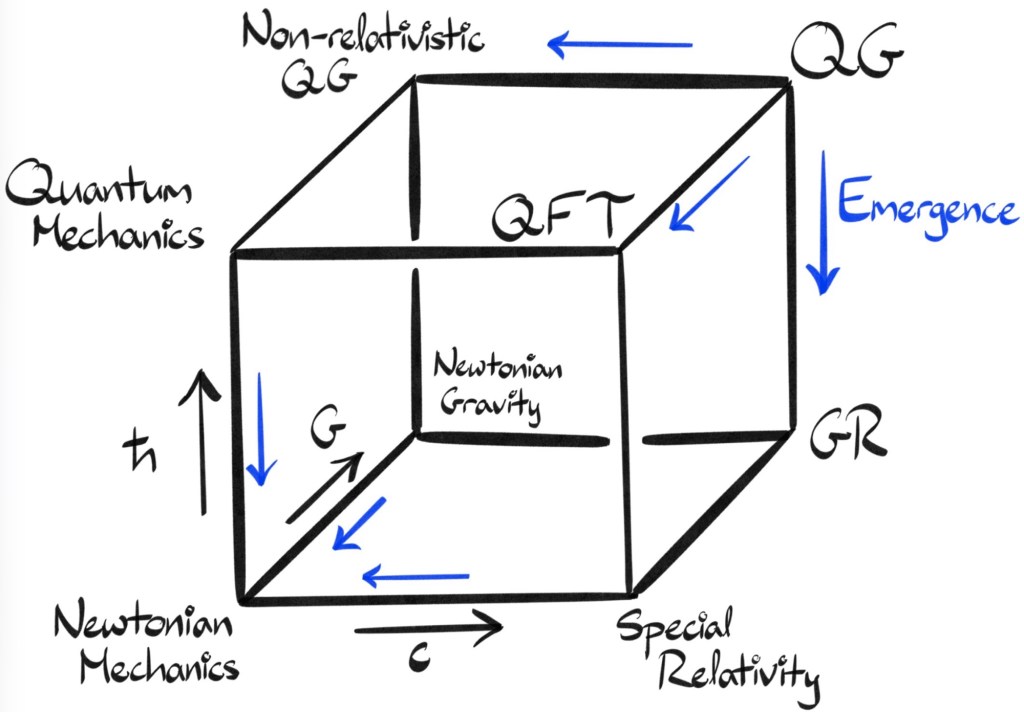
 controls how relativistic it is, Newton’s constant
  determines the strength of gravity, and Planck’s constant
  dials the quantumness.
How to be effective
By adding an extra layer to the onion of knowledge, the reductionist approach to physics grants us a deeper fundamental understanding of the laws of nature. It’s how we unlocked symmetry principles, the quarks inside protons… heck, even the equations governing the very fabric of spacetime itself! Wild stuff.
Fundamentalism, in this context, I want you to picture as the act of swimming upstream—pushing against the current of emergence, in search of the most basic laws. This is the part resonating with many aspiring physicists; to understand deeply how nature works. However, just because a theory is more fundamental, does not mean it’s always more useful.
Take Newton’s laws. They are, in the strictest sense, wrong. Yet we continue to teach them to high school students and physics undergraduates.
Why is that?
Why did the discovery of special relativity and quantum mechanics not make classical mechanics obsolete? And perhaps more importantly, how could Newton get around needing relativistic or quantum knowledge to reason why apples fall from trees?
The answer is simple: because he didn’t have to, and even today, neither do we.
This leads us to our second slogan:
Ignorance need not impede our understanding.
Unless one cares deeply about the small details, the emergent theory is after all still a “somewhat valid” theory. There is no reason to part ways with our presumptions, granted we accept their limitations. When to apply Newton’s laws therefore boils down to a mere question of convenience. Why bother with overly-complex and tedious computations using a more fundamental formalism, when one can instead make shortcut assumptions and get an answer that is adequate?
Think of it this way: knowing the molecular structure of water may tell you something about the symmetry of snowflakes—but it tells you nothing about the shape of a glacier. Trying to apply the most fine-grained theory to solve problems on completely different scales and complexity is thus nothing else but ambitious. It is like using a particle accelerator to make your morning coffee. Impressive, sure, but completely unnecessary. A simple pendulum using quantum gravity? Pff… Newton will do the trick in seconds.
That simple observation motivates a drastically different kind of theory—one that doesn’t strive to compute everything to absolute precision from first principles, but is instead tailored to specific regimes and questions. We call these effective theories. Their job is to purposefully suppress, or even fully abandon, irrelevant details for the sake of macroscopic clarity and tractable prediction.
Where the fundamental theory seeks reduction, the effective theory makes construction feasible.
Allow me to let you in on a little secret. If there is anything I have learnt during my PhD, it is that physicists are pragmatists. We are professional loophole-seekers. While mathematicians pursue rigour for its own sake, physicists pursue efficiency; the art lies in recognising when one can afford to cut corners—when microscopic details can be safely ignored without sacrificing predictive power.
Without such selectivity, calculation becomes impossible. A theory that insists on tracking every fundamental constituent in every computation would not be powerful; it would be a paralysing nightmare to deal with! Most of the physics we learn and deploy turns out to be effective. Not as an intellectual sacrifice—in fact, quite the opposite. Being effective is what makes physics workable in the first place.
Where does this leave Quantum Gravity?
History has shown, time and time again, that deeper theories do not erase old ones. Rather, they place them in perspective: in the case of Newton’s laws, we now understand why they work in their domain, because Newtonian mechanics emerges in the classical limit. The fact that we continue to teach and use Newtonian mechanics is not a failure of modern fundamental physics—it is a triumph of effective theory!
So imagine that tomorrow someone finally solves the grand puzzle of QG. Should we expect it to replace the physics we currently use? Will it be our ‘Theory of Everything’; capable of deriving the stock market, determine how proteins fold, or predict the weather from first principles?
It will not.
Because that was never the point.
The quest for QG, despite its allure, is not to construct an all-encompassing computational framework. It is about pushing our current theories to their breaking point—about addressing regimes where general relativity and quantum field theory can no longer stand alone, and in doing so, clarifying why they work so astonishingly well. In that sense, QG will not replace them, but situate them within a deeper mathematical structure from which they emerge.
Nor has the purpose ever truly been to deliver a “final” theory in the sense of intellectual closure. If history teaches us anything, it is humility; that QG itself may well turn out to be an effective theory of something even more exotic, still beyond our imagination. Where, then, does this leave the fundamental physicist? Exactly where we have always been: swimming upstream.
 Benjamin Muntz